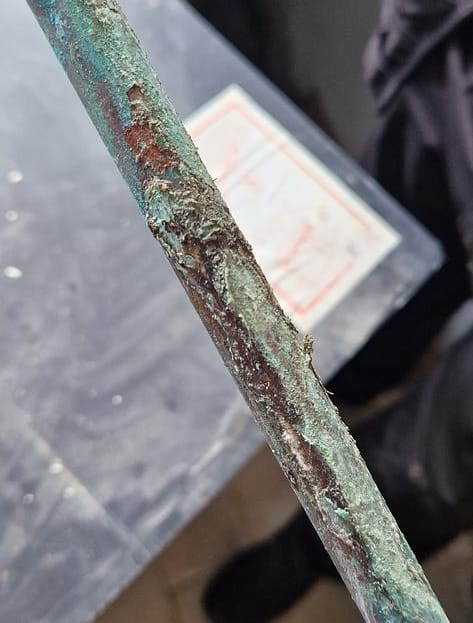
If you’re seeing damp, staining, recurring mould, boiler pressure loss, or reduced water pressure and you’re not sure where it’s coming from, leak detection helps you get clarity without guesswork.
We support homeowners in Downpatrick with leak detection services for the home, and we carry out repairs.
Call to get clear options for finding and fixing your leak.
We’ll explain the approach and likely next steps on the phone.

When the source isn’t obvious, the main risk is ongoing damage while you’re still guessing. Leak detection is the practical next step to narrow it down and plan the right fix.
We reduce the guesswork by narrowing down the most likely source of the leak.
You'll limit any ongoing damage by asking us to find the cause.
We'll put in place a targeted repair plan (and complete repairs as soon as possible).
For next steps including Trace and Access reporting where needed, helping you make informed decisions.
We focus on practical diagnosis and clear decisions, not vague assumptions.
Heating & plumbing engineers, who specialise in leak detection and repairs.
A clear, structured approach to testing and narrowing down the source of the leak.
Straightforward communication and practical guidance throughout.
We can provide insurer-ready reports when needed (Trace and Access), using insurance-safe wording.
Local service delivery across Northern Ireland, including Downpatrick.
Quick questions first to understand symptoms, affected areas, and urgency.
Structured testing to narrow down the source, including pressure tests where appropriate.
Findings explained in plain language (what's likely happening and where).
Repair options outlined; repair completed where appropriate and agreed.
Documentation provided (photos and video when helpful, a written summary, and a Trace and Access report if requested).
Including any follow-on work that may be needed, such as optional damage restoration if you want us to help, or support for your chosen contractor.
A few practical notes:
To locate hidden water leaks, we may use a mix of methods and technology depending on the symptoms and pipework:
Using acoustic sensors, an acoustic ground microphone, and ultra-sensitive microphones to help pinpoint leak noise.
Thermal imaging and infrared checks using thermal imaging cameras (including FLIR where appropriate).
Tracer gas (hydrogen/nitrogen) and Tracer Gas Technology for hard-to-find leaks.
Moisture mapping using moisture meters to track how water is moving through materials.
Pressure tests where appropriate (for example with a hydraulic pressure testing pump), alongside other testing.
Pipe locating for buried water pipes and Underground Leak Detection on suspected mains runs.
(including RIDGID inspection camera / endoscope) and other cameras for visual checks in voids and service routes.
Leak detector tools selected to match the job, with a focus on clear findings over guesswork.
Leak issues are not always obvious at first. It is worth getting help if you’re seeing any of the following:
Or staining on ceilings or walls that keeps recurring despite treatment.
Mould that keeps returning in the same area despite cleaning and ventilation.
A musty smell or a damp feel in a room that persists.
Boiler pressure repeatedly dropping (sealed systems).
Or intermittent air in the lines that can't be explained.
Warped skirting, or bubbling paint that indicates water damage.
If water is near electrics, prioritise health and safety and contact a professional immediately.
Common homeowner call-outs include bathroom & shower leaks (including failed grout lines), Mains water leaks on water pipes, and heating-related issues such as Central heating leaks involving radiators, heating systems and central heating pipe runs, as well as Underfloor heating leaks.
Often around grout lines, trays, and concealed pipework.
Including radiators and pipework on central heating and other heating systems
Hidden leaks in underfloor heating systems requiring specialised detection.
Affecting water pipes and incoming supplies, often causing pressure issues.
Where buried pipework is suspected of leaking, requiring specialised equipment.
That may need burst pipe repair and urgent isolation support to prevent damage.
Trace and Access refers to locating the leak and accessing the area to complete the repair, with documentation of what was found and what work was done.
Most UK home insurance policies distinguish between fixing the pipe (which is often a maintenance cost) and the damage caused to get to it. "Trace and Access" focuses on the latter.
If you're making an insurance claim, your insurer will likely need proof of where the leak was and what work was required to reach it.
Clear, fact-based documentation with photos of the leak and the access work.
A detailed record of what we found, helping you substantiate your claim.
Itemised breakdowns where needed to help you evidence the work.
While we cannot confirm your specific policy coverage, we give you the clear facts and professional evidence you need to support your claim.
If you’re dealing with damp, staining, pressure loss, or recurring mould and you need clarity, the safest next step is to talk it through and arrange an inspection.
Leak detection is a structured way to narrow down where water is escaping from. We start with your symptoms, check the most likely zones, and use on-site testing to pinpoint the source as accurately as conditions and access allow.
Where appropriate and agreed, yes. If the repair is straightforward and accessible, we can often move directly to repair. If additional access or follow-on trades are needed, we will explain your options clearly.
Not always. Some leaks can be located without opening-up, but access depends on where the leak is and how the pipework runs. If opening-up is needed, we will explain why and what the practical options are before proceeding.
Condensation often links to ventilation, temperature, and recurring surface moisture, while leaks can show as persistent staining, localised damp that worsens, boiler pressure drops, or wet flooring in the same area. If you are unsure, we can help you sense-check symptoms on the phone and advise the safest next step.
Yes. We can provide a Trace and Access report that documents what was found and what work was required to access and repair the leak, with photos where appropriate.
Cover depends on your policy and the insurer’s assessment. Insurers may ask for evidence of the cause and what access or repair work was required, and our report can support that documentation. We cannot confirm cover or acceptance.
Yes, we can help with burst pipe repair where appropriate and agreed. If it’s safe to do so, isolate the water supply and keep water away from electrics, then call so we can advise the next step based on what’s happening.
We serve Downpatrick and surrounding areas including: Saintfield, Comber, Strangford, Newcastle, Ballynahinch. If you are unsure whether you are in range, call and we will confirm.
If safe to do so, isolate the water supply (if you know how), avoid using electrics near water, and call for professional help. If there is active ingress or water near electrics, prioritise safety first.
We cover all of Downpatrick and surrounding areas, including:
Saintfield, Comber, Strangford, Newcastle, Ballynahinch.
We also provide Leak Detection Services across Northern Ireland.
Our engineers are local, and we also cover nearby towns and cities including:
- Leak Detection Armagh;
- Leak Detection Ballymena;
- Leak Detection Belfast;
- Leak Detection Bangor;
- Leak Detection Coleraine;
- Leak Detection Derry;
- Leak Detection Lisburn;
- Leak Detection Newtownabbey.
Call us to find out how we can help you today.

NI Leak Detection delivers expert, non-invasive leak detection services for homes, businesses, and industrial sites across Northern Ireland. Using cutting-edge technology and a skilled team, we pinpoint leaks with precision, preventing unnecessary damage. Whether dealing with concealed water or gas leaks, or structural issues, our prompt and reliable solutions help you avoid costly repairs and safeguard your property.
NI Leak Detection, part of the PCLA group.
Property Claims Loss Assessors Ltd (PCLA) are authorised and regulated by the Financial Conduct Authority. FRN 933781.
NI Leak Detection is a trading name of Property Claims Loss Assessors LTD. By using the services of NI Leak Detection, you acknowledge and agree that all leak detection services are provided by independent third-party contractors introduced to you by NI Leak Detection.
NI Leak Detection acts solely as an introducer and does not supervise, manage, or control the services performed by third parties. All payments for services must be made directly to the respective third-party contractors. NI Leak Detection receives no commission or financial reward for providing this introduction service.
NI Leak Detection disclaims any and all responsibility or liability for the quality, workmanship, or suitability of services provided by third-party contractors.
To the fullest extent permitted by law, NI Leak Detection shall not be held liable for any loss, damage, or defects arising out of or in connection with the services provided by third-party contractors. Any concerns, disputes, or claims must be addressed directly to the contractor responsible for performing the services.
NI Leak Detection makes no representations or warranties, express or implied, regarding the services offered by third-party contractors, including but not limited to warranties of merchantability, fitness for a particular purpose, or quality of work.
This disclaimer is governed by and construed in accordance with the laws of the United Kingdom.