
Acoustic leak detection in Northern Ireland
Suspect a hidden pipe leak? Specialist listening can help narrow the search, so the findings can guide decisions about further investigation, access and repairs.
Listen for evidence of a hidden leak
Water escaping from a pressurised pipe can create sound and vibration that travel through the pipe and surrounding ground. Acoustic equipment makes these signals easier to assess and compare at suitable points.
NI Leak Detection introduces independent contractors across Northern Ireland. Describe what you have noticed so the contractor can assess whether acoustic testing is suitable for the suspected system.
Explore the water leak-detection service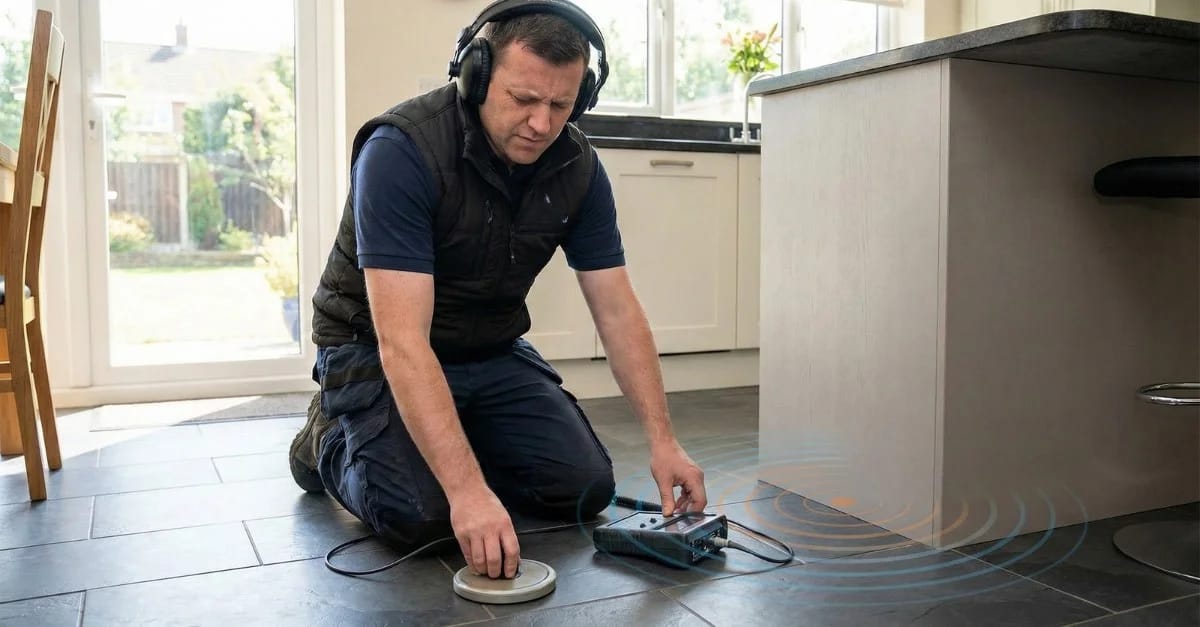
Choose the method for the conditions
Listening is one part of an investigation. Pipe material, access, pressure and surrounding noise can affect how useful the readings are. The contractor should explain what the evidence supports and whether other checks are needed.
A quiet reading does not establish that a pipe is sound. Equally, hearing water does not identify a fault on its own. Discuss the findings before agreeing an access point or repair.
Investigating underground pipeworkInvestigating leaks beneath concrete floorsTurn findings into a clear next step
01 / Describe
Explain the problem
Tell the contractor about the symptoms, affected areas and any earlier repairs or investigations. Agree the survey scope, attendance, price and any report needed.
02 / Investigate
Compare the evidence
The contractor selects suitable listening points and any further tests. Ask what has been established, what remains uncertain and whether more investigation is needed.
03 / Agree
Plan access and repairs
Independent engineers usually fix leaks and carry out repairs. Confirm the proposed access, repair work, any return visit and who will restore affected surfaces.
Help the contractor plan the visit
Have the postcode, property type and a description of the problem ready. Mention known pipe routes, shared supplies, previous repairs and restrictions on access. If the issue comes and goes, explain when you notice it.
Tell the contractor about nearby machinery or other regular noise and ask whether it affects the proposed tests. Follow their preparation instructions; you do not need to operate valves or alter the system to make an enquiry.
Request a callback about a surveyAgree what is included
Confirm investigation, opening-up, repairs and reinstatement separately with the contractor. Specialist listening can help reduce unnecessary access, but it does not guarantee an exact location, a damage-free result or a repair during the first visit.
If you need a leak-detection report, agree its content and cost before booking. Customer-requested trace-and-access or water-damage claims help requires that report. A PCLA loss assessor’s escape-of-water damage survey is a separate service, and insurance payment is not guaranteed.
Read about trace and accessAcoustic leak-detection questions
Do I need to hear the leak myself?
No. Specialist equipment is used to assess signals that may be difficult to hear unaided. Tell us about your observations without assuming the cause.
Can acoustic testing investigate a leak under a floor?
It may help, depending on the pipework, construction and available signals. The contractor decides which tests are appropriate and explains their limitations.
Is acoustic detection the same as thermal imaging?
No. Acoustic testing assesses sound and vibration; thermal imaging shows surface-temperature patterns. The contractor may select different methods for different questions.
Who carries out and charges for the work?
You contract with and pay the independent contractor directly. NI Leak Detection arranges the introduction and receives no commission or financial reward for it.
Discuss an acoustic leak-detection enquiry
Tell us your postcode, the affected rooms and what you have noticed. We can discuss the enquiry and arrange an independent contractor introduction.
See the areas covered