
Trace and access in Northern Ireland
Find the source of a hidden leak, understand the access needed and arrange a record of the findings for your next steps. We help homeowners and businesses discuss an investigation, repairs and any report needed for a possible insurance claim.
Tell us if your insurer has asked for a report.
Find the source before opening up
A damp patch does not always show where a leak starts. Specialist tests help narrow the search so access can be planned around the findings. Depending on the property, this may mean lifting a tile, opening a floor or reaching concealed pipework.
Engineers usually repair the leaks they find. Agree the access, repair and any making-good work with the contractor; some work may need a separate visit.
Explore the leak-detection service →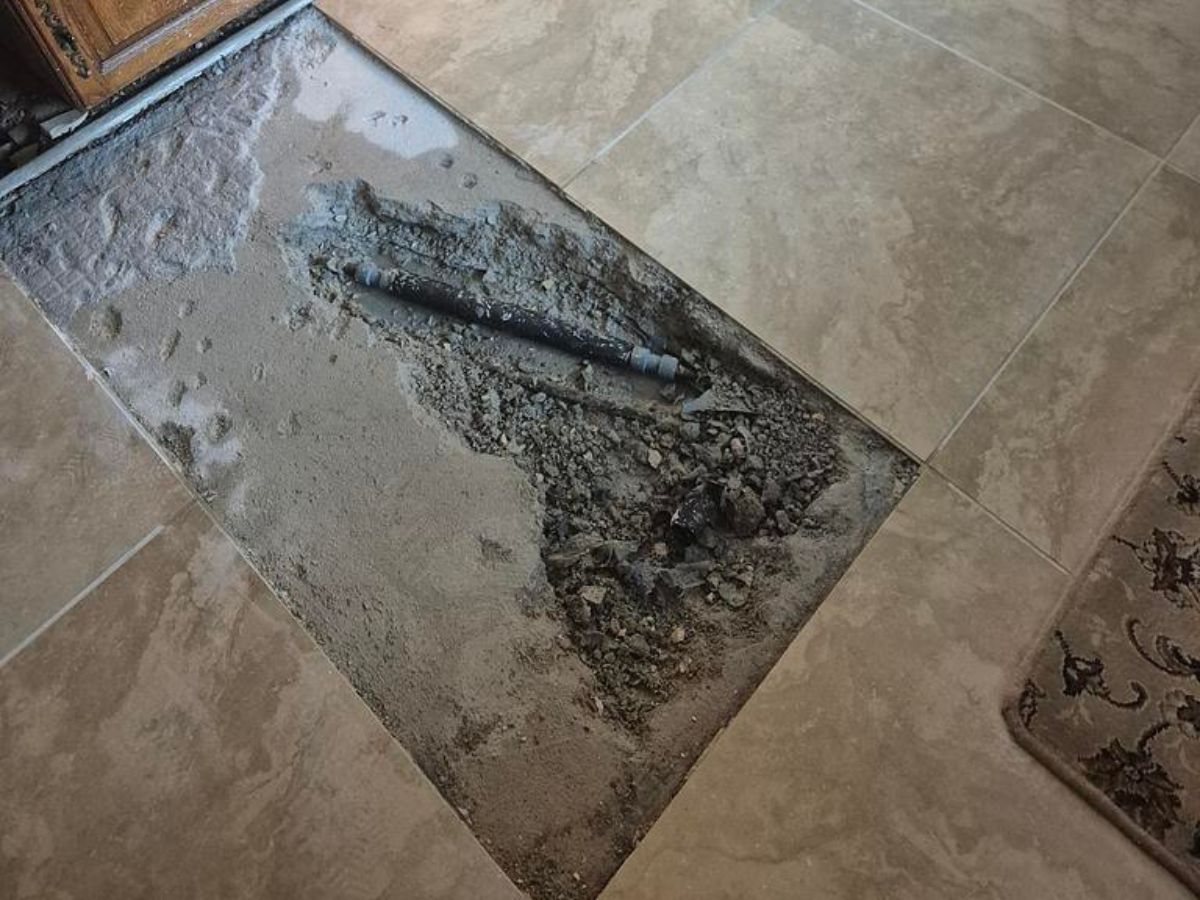
From investigation to the next steps
01 / Trace
Locate the source
Specialist detection helps narrow down where the leak is. The contractor chooses suitable methods for the property and the suspected problem.
02 / Access
Agree access and repairs
Agree how the leak will be reached, what repairs are needed and the likely costs and disruption with the contractor.
03 / Findings
Document the next steps
Discuss the findings and any further work. If you need a report, agree its scope and price before booking so your requirements are understood from the start.
What could your insurance help with?
Trace and access describes finding a hidden leak and reaching its source. Trace-and-access cover is the policy wording that may help pay eligible costs. You can arrange an investigation even if you do not have this cover.
Your buildings policy may help with eligible costs of finding and reaching a hidden leak. The repair of the failed pipe, making good the opening and repairing water damage can be treated differently.
Investigation and access
Finding the source and reaching the concealed pipework.
Repairing the fault
Repairing or replacing the leaking pipe or fitting.
Making good the opening
Putting back the floor, wall or other area opened to reach the leak.
Wider water damage
Drying and repairing damage caused by the escaped water.
A useful record of what was found
If you may need claims assistance, tell us before booking that you need a leak-detection report. Agree its scope, price and whether it is included in the quote.
Ask for a clear record of the investigation, findings, relevant photographs and work carried out. Match this to what your insurer requests, and keep the report, invoices and correspondence together.
Prepare your claim records →Questions before you book
Does trace and access include fixing the leak?
Tracing finds the source and access makes it reachable. Engineers usually carry out repairs too, but agree the scope and cost with the contractor. Some work may need a separate visit.
Is every survey supplied with a report?
Report inclusion and pricing need to be agreed before booking. If you intend to claim, say that you need a leak-detection report when requesting a quote.
Should I speak to my insurer before booking?
Before agreeing non-urgent work you intend to claim for, ask your insurer about cover and any approval requirements. Do not delay urgent action to limit damage.
Will my insurance pay?
Payment depends on your policy, its conditions and the facts. A report supports the evidence but does not guarantee reimbursement.
Who do I pay?
You contract with and pay the independent contractor directly. NI Leak Detection receives no commission or financial reward for the introduction.
Do I have to appoint PCLA?
No. PCLA’s claims support is an optional separate service. You can enquire about help before the report is ready; a leak-detection report is needed for claims assistance. Appointment terms and fees are explained separately.
Need help finding a hidden leak?
Call or request a callback. Tell us what you have noticed and mention any report your insurer has requested, so we can discuss the right next step.
See the areas covered